We are studying MEMS (micro-electro mechanical systems), from materials to device and systems, particularly for biomedical and welfare applications. Students / researchers with various background, including (but not limited to) mechanical engineering, materials sciences / engineering, electrical engineering, information sciences, physics, chemistry are welcome. Below are some examples of our research topics.
当研究室では、材料からデバイス、さらにはシステムに至るまで、MEMS(微小電気機械システム)に関する研究を行っており、特に生体医療・福祉への応用に注力しています。機械工学、材料科学・工学、電気電子工学、情報科学、物理学、化学などをはじめ、分野を問わず多様なバックグラウンドを持つ学生・研究者を歓迎します。下記にいくつかのテーマを紹介します。
主な共同研究先:広島市立大学 式田光宏教授,長谷川義大准教授,名古屋大学 川部勤教授,松島充代子准教授
Flexible MEMS thermal physical sensor
フレキシブルMEMS熱式物理量センサ
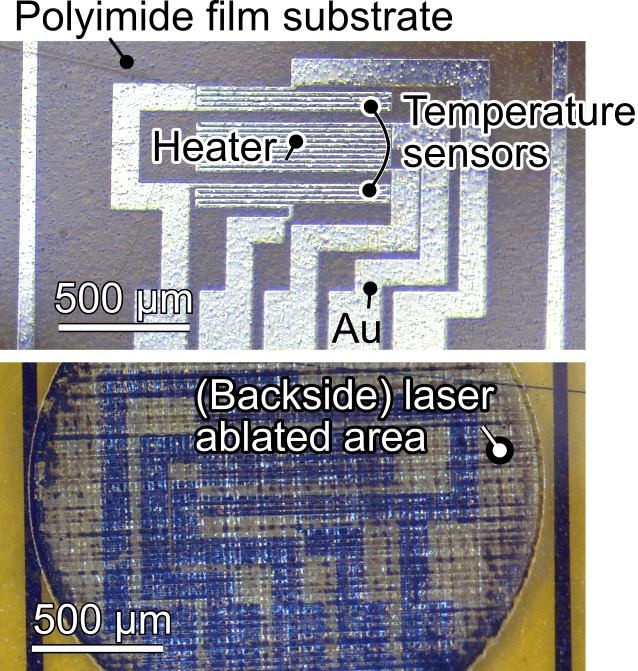
Conventional MEMS are primarily fabricated from silicon (Si) and have been widely used as highly accurate and reliable sensors across various fields. However, because Si is a rigid material, its mechanical properties differ significantly from those of soft biological tissues, which can lead to discomfort, inflammation, or even tissue damage in biomedical applications. To address this issue, we are developing flexible MEMS thermal sensors that are mechanically compliant and better suited for integration with biological systems. These sensors operate based on thermal principles to detect flow and motion. We are also implementing the developed sensors to measure important physical parameters such as fluid flow velocity, acceleration, and wall shear stress.
従来のMEMSは主にケイ素・シリコン(Si)で作製され、高精度かつ高信頼性なセンサとして幅広い分野で利用されてきました。しかし、Siは硬い材料であるため、やわらかい生体組織とは機械的特性が大きく異なり、医療応用では違和感や炎症、組織損傷の原因となる可能性があります。そこで本研究室では、生体に適合する柔軟性を持つフレキシブルMEMS熱式センサの開発に取り組んでいます。本センサは、温度変化を利用して流れや動きを検出するもので、流体の流速、加速度、壁面せん断応力といった物理量の計測にも展開しています。
Non-traditional materials and processes for MEMS
非伝統的材料・プロセスのMEMS応用
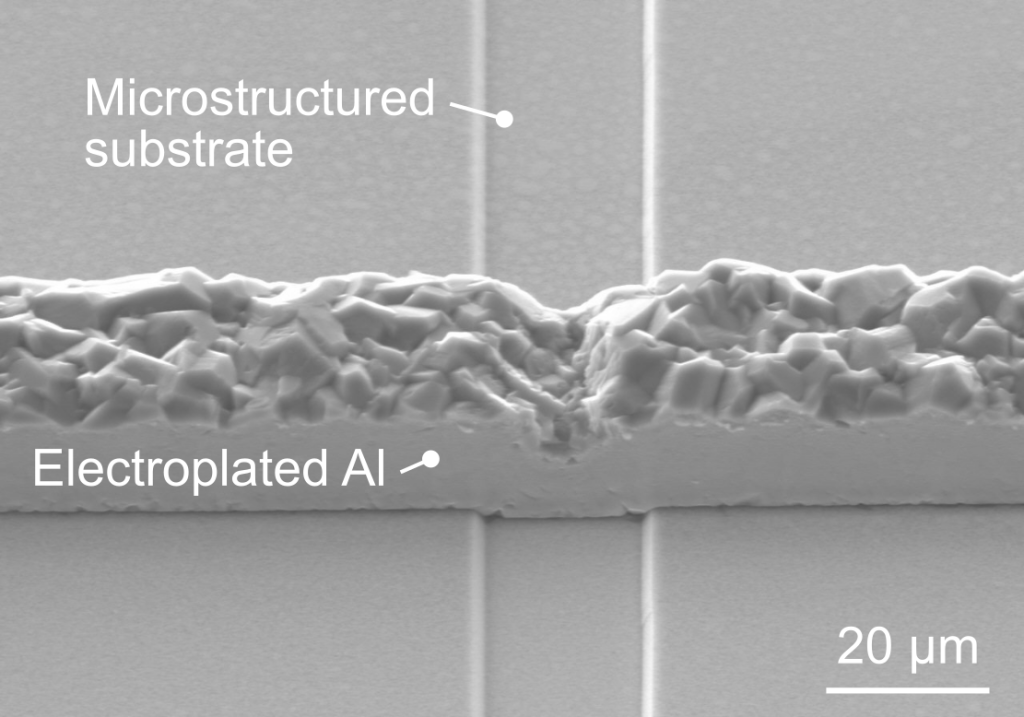
MEMS have traditionally been built on silicon (Si) platforms using well-established microfabrication processes. In this research, we explore non-traditional materials and fabrication processes to expand the design space of MEMS devices. One approach is the use of electroplating of metals such as gold (Au), copper (Cu), and aluminum (Al), which enables thick, high-quality films for heterogeneous device packaging and efficient thermal actuators. In parallel, we investigate laser-induced graphene (LIG), a maskless and scalable technique that converts polymer surfaces into conductive graphene structures, suitable for flexible and sensitive sensing elements. Furthermore, we develop physical sensors based on biodegradable materials, aiming to reduce environmental impact in the emerging “trillion-sensor” era by creating devices that naturally decompose after use. By integrating these unconventional materials and processes, we seek to establish a new paradigm for MEMS that combines performance, adaptability, and sustainability.
従来のMEMSは、ケイ素・シリコン(Si)を基盤とした微細加工技術によって発展してきました。その従来技術を拡張するために本研究室では、非伝統的材料およびプロセスを活用した新しいMEMS技術の創出を目指します。具体的には、金(Au)、銅(Cu)、アルミニウム(Al)の電解めっきを用いた厚膜形成により、異種材料の高精度パッケージングや高効率な熱アクチュエータを実現しています。また、ポリマー表面をレーザ照射により直接グラフェン化するレーザ誘起グラフェン(LIG)技術を用い、マスクレスかつ柔軟基板上での高感度センサ構築を可能にしています。さらに、トリリオンセンサ時代における環境負荷低減を見据え、生分解性材料を用いた物理センサの開発にも取り組んでいます。これらの非伝統的技術を融合することで、高機能性と適応性、持続可能性を兼ね備えた次世代MEMSの新たな設計指針を構築しています。
Micro-mechatronics using hybrid integrated MEMS
集積化MEMSハイブリッド実装によるマイクロメカトロニクス
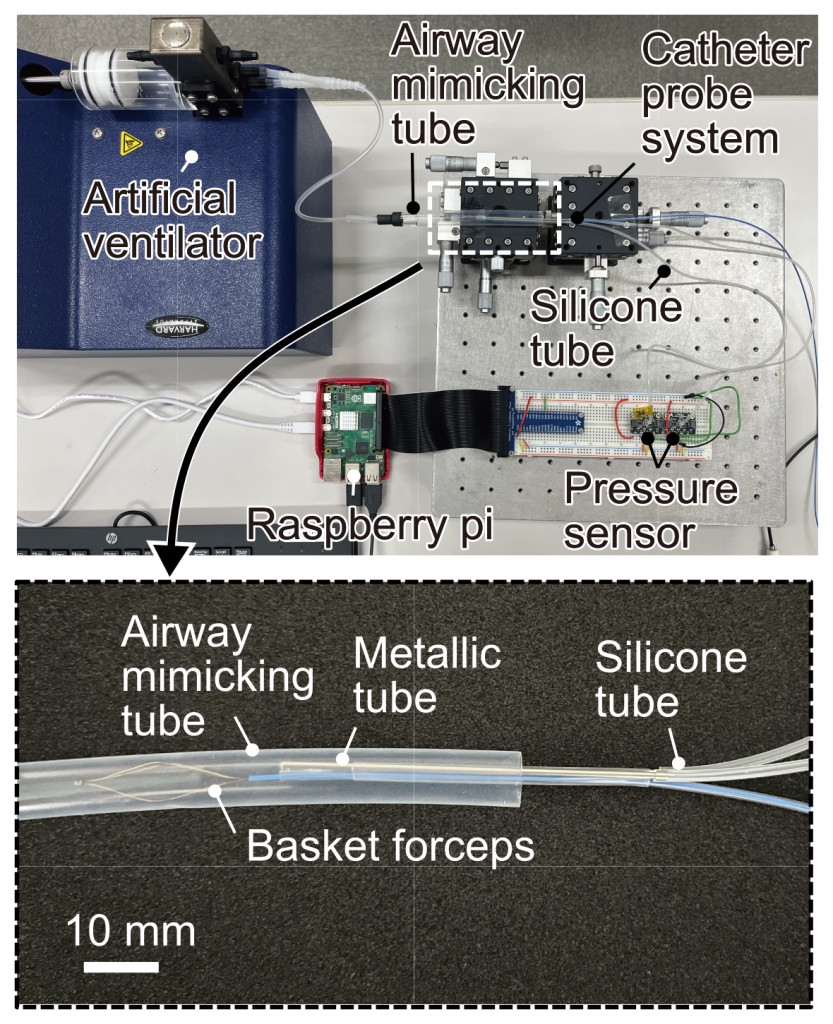
Micro-mechatronics combines microsensors, embedded electronics, and data processing to create compact sensing systems. Here we develop accessible biomedical measurement platforms by integrating commercially available MEMS sensors with low-cost microcontrollers such as Raspberry Pi and hybridizing it with conventional medical tools. These MEMS devices can capture medically relevant signals, enabling real-time data acquisition and processing without expensive clinical equipment. By emphasizing rapid prototyping and system integration, this approach supports the development of portable and wearable health-monitoring systems, contributing to affordable and continuous healthcare solutions.
マイクロメカトロニクスは、マイクロセンサ、組込み電子回路、データ処理を統合した小型システムを構築する技術として知られています。本研究室では、市販のMEMSセンサと低コストマイコンであるRaspberry Piを組み合わせ、既存の医療器具にハイブリッド実装して手軽に利用可能な生体信号計測システムを開発しています。これにより、生体医療・福祉に関連する信号をリアルタイムで取得・解析することが可能とします。迅速な試作とシステム統合を重視することで、在宅医療やウェアラブル機器への応用を見据えた、低コストで持続的な健康モニタリング技術の実現を目指します。